In today’s fast-moving electronics landscape, electronic PCB assembly is the backbone of virtually every product that powers modern life from industrial automation systems to consumer gadgets and medical devices. Whether you’re an OEM launching a new product or scaling an existing line, understanding the ins and outs of electronics PCB assembly is critical to making informed manufacturing decisions.
At Cusack Electronics, we’ve spent over 25 years delivering precision electronic assembly PCB solutions for clients across 48 states. In this guide, we’ll walk you through everything you need to know about PCB electronic assembly from key processes and materials to quality standards and how to choose the right contract manufacturing partner.
What Is Electronic PCB Assembly?
Electronic PCB assembly sometimes called PCB and electronic assembly refers to the process of populating a bare printed circuit board with electronic components such as resistors, capacitors, integrated circuits, transistors, and connectors to create a functional electronic assembly. The assembled board is then tested and integrated into a finished product.
PCB electronics assembly involves several stages, each requiring precision equipment, skilled technicians, and strict quality control protocols. The process has evolved dramatically over the past two decades, moving from manual through-hole assembly to highly automated surface mount technology (SMT) lines found in modern electronics manufacturing assembly line PCB factory environments.
Key PCB Assembly Processes Explained
1. Surface Mount Technology (SMT)
SMT is the dominant method in modern electronic PCB assembly. Components are mounted directly onto the surface of the PCB using solder paste. The board then passes through a reflow oven, which melts the paste and bonds the components. SMT allows for smaller component sizes, higher component density, and faster assembly speeds all critical advantages in today’s competitive electronics market.
2. Through-Hole Technology (THT)
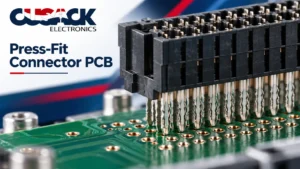
Through-hole assembly involves inserting component leads through drilled holes in the PCB and soldering them on the opposite side. While older, THT remains essential for components requiring strong mechanical bonds, such as connectors, transformers, and capacitors. Many boards use mixed assembly combining SMT and through-hole for optimal performance.
3. Mixed Assembly
Mixed PCB electronic assembly combines both SMT and THT on the same board, leveraging the advantages of each method. This is common for complex boards that include both small IC packages and larger through-hole components.
4. BGA, QFN, and Advanced Package Assembly
Modern electronics PCB assembly includes support for Ball Grid Array (BGA), Quad Flat No-lead (QFN), and other advanced IC packages. These require precise solder paste application, accurate placement machines, and X-ray inspection to verify joint integrity.
The Electronics Manufacturing Assembly Line PCB Factory: How It Works
A professional electronics manufacturing assembly line PCB factory operates as a tightly choreographed sequence of automated and manual steps. Here’s what that looks like at a modern contract manufacturer like Cusack Electronics:
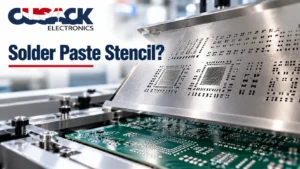
- Solder Paste Printing: Automated stencil printers apply solder paste to PCB pads with micron-level accuracy.
- Component Placement: High-speed pick-and-place machines position thousands of components per hour with sub-millimeter precision.
- Reflow Soldering: Boards travel through a multi-zone reflow oven where temperature profiles are carefully controlled to ensure perfect solder joints.
- Automated Optical Inspection (AOI): Cameras scan every board for placement defects, missing components, solder bridges, and other anomalies.
- Through-Hole Insertion & Wave Soldering: For THT components, automated or manual insertion is followed by wave soldering.
- Functional Testing: Boards are powered up and tested against defined electrical parameters to verify they operate as intended.
- Final Visual Inspection & Packaging: Certified technicians conduct a final review before boards are packaged for shipment.
Materials and Components in PCB Electronic Assembly
The quality of your PCB electronics assembly begins with materials. Key considerations include:
- PCB Substrate: FR4 is the industry standard, but high-frequency applications may require Rogers or PTFE materials.
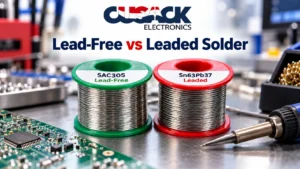
- Solder: RoHS-compliant lead-free solder alloys (SAC305 is most common) are standard in modern pcb and electronic assembly.
- Components: Sourcing from authorized distributors protects against counterfeit parts a growing risk in the global electronics supply chain.
- Stencils: Laser-cut stainless steel stencils ensure consistent solder paste deposition.
Quality Standards in Electronic Assembly PCB
Quality is non-negotiable in an electronic assembly PCB. The two foundational standards are:
- IPC-A-610: The global acceptability standard for electronic assemblies, covering solder joint quality, component placement, and workmanship.
- IPC J-STD-001: The requirements standard for soldering electronic assemblies, governing materials, methods, and inspection criteria.
At Cusack Electronics, every board is produced and inspected to IPC-A-610 and IPC J-STD-001 standards, with full traceability across solder lots, components, and inspection records.
Why Choose a Contract Manufacturer for PCB Assembly?
For most OEMs, outsourcing electronics PCB assembly to a contract manufacturer makes strong financial and operational sense. Here’s why:
- Capital Efficiency: No need to invest in expensive SMT lines, reflow ovens, AOI systems, or pick-and-place machines.
- Scalability: Contract manufacturers can ramp production quickly to meet demand fluctuations.
- Engineering Support: Experienced partners offer Design for Manufacturability (DFM) and Design for Testability (DFT) reviews that catch problems early.
- Component Sourcing: Established supply chain relationships mean better pricing and fewer shortages.
- Quality Assurance: Dedicated QA teams and certified processes deliver consistent results.
Cusack Electronics: Your Electronic PCB Assembly Partner
At Cusack Electronics, our electronic assembly PCB capabilities span the full spectrum from quick-turn prototypes to high-volume production runs. Our Michigan-based facility operates an advanced electronics manufacturing assembly line with PCB factory workflows built around IPC standards, in-house engineering support, and complete supply chain management.
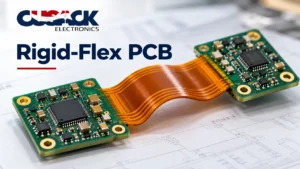
We support BGA, QFN, QFP, HDI, rigid-flex, and multilayer PCBs, and our integrated manufacturing model means your boards move seamlessly from PCB assembly into CNC machining, wire harness assembly, powder coating, and box build all under one roof.
FAQs: Electronic PCB Assembly
Q1: What is the difference between PCB fabrication and PCB assembly?
PCB fabrication refers to manufacturing the bare printed circuit board itself etching copper traces, drilling holes, applying solder mask, and silkscreen. PCB assembly (PCBA) is the subsequent process of populating the bare board with electronic components. Most contract manufacturers offer both services.
Q2: What types of PCBs can Cusack Electronics assemble?
We assemble rigid, flexible, rigid-flex, multilayer, HDI, and standard FR4 PCBs. We support SMT, through-hole, mixed assembly, and advanced packages, including BGA, QFN, and QFP.
Q3: What quality standards does Cusack Electronics follow for PCB electronics assembly?
We follow IPC-A-610 and IPC J-STD-001 standards, with AOI, SPI, and functional test verification on every order.
Q4: How do I get a quote for electronic PCB assembly services?
You can request a free quote directly on our website. Provide your BOM, Gerber files, and order quantity, and we’ll respond within 24 hours. Visit our Contact Us page to get started.