THE 30-SECOND VERSION
- Electronic contract manufacturing (ECM) is the practice of hiring an outside specialist to build your electronic product instead of building it yourself. You own the design and the brand. They own the line, the equipment, and the people who run it.
- ECM and EMS describe the same relationship from different angles. ECM is the arrangement. Electronic manufacturing services (EMS) is the menu of work performed under it.
- The core services are component sourcing, printed circuit board assembly, box build integration, and product testing. Most providers also offer design review and logistics.
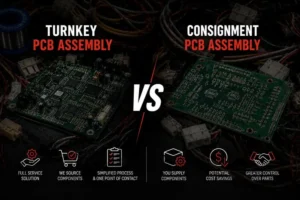
- Pricing follows two models. Turnkey means the manufacturer buys the parts. Consignment means you supply them.
- The single biggest predictor of a smooth build is the quality of your design package, not the price on the quote.
What Is Electronic Contract Manufacturing, Exactly?
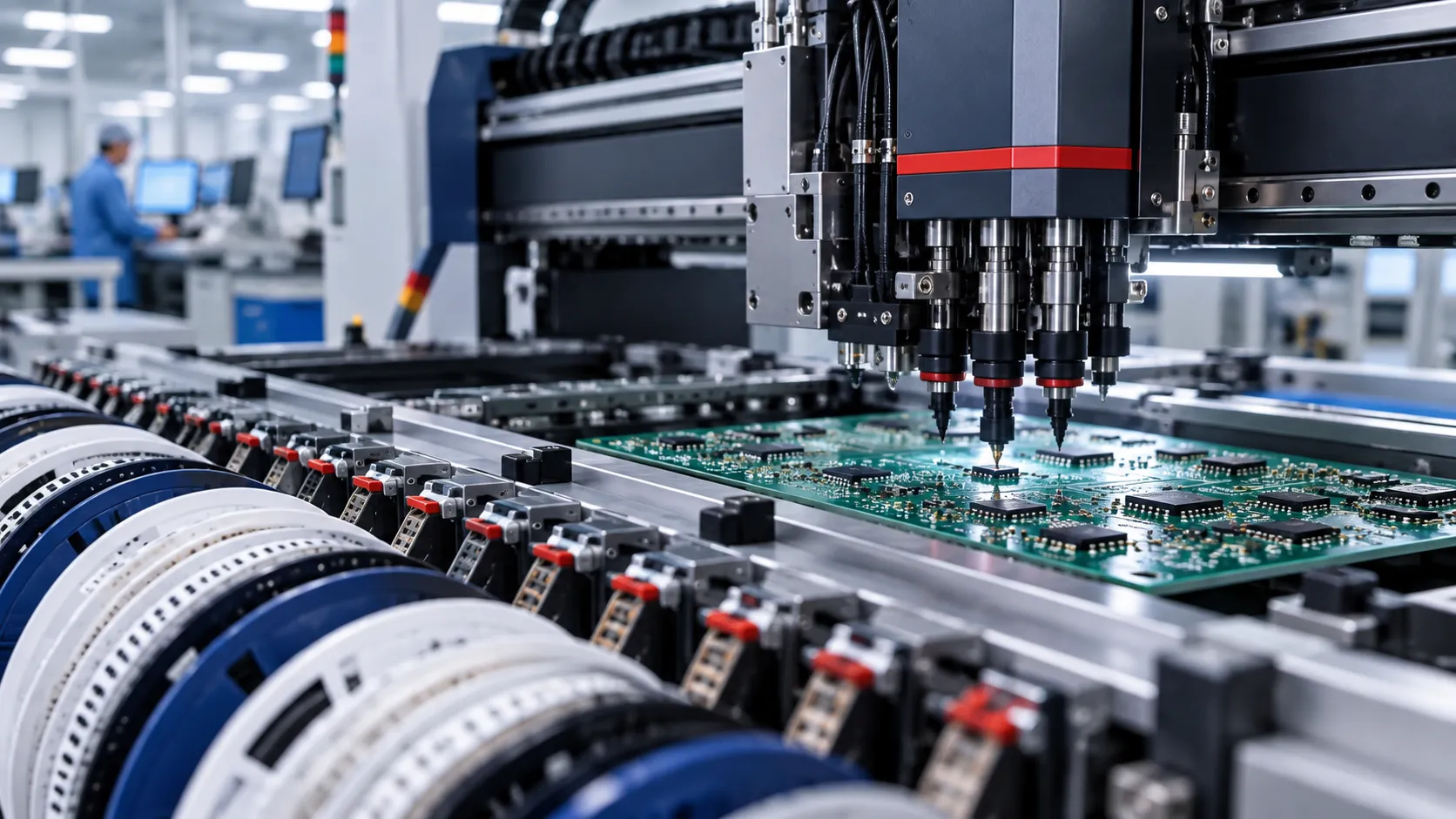
Electronic contract manufacturing is a business arrangement in which a company outsources production of its electronic products to a specialist manufacturer that builds them under the client’s brand. The client supplies the design. The manufacturer supplies equipment, labor, supply chain, and quality systems.
Think of it the way a publishing house works with a printer. The publisher owns the manuscript, the cover, and the imprint on the spine. The printer owns the presses, the paper contracts, and the expertise to make 30,000 identical copies that do not smear.
Nobody confuses the printer for the author. The same separation holds in electronics contract manufacturing: the contract manufacturer executes your design, but the product remains yours.
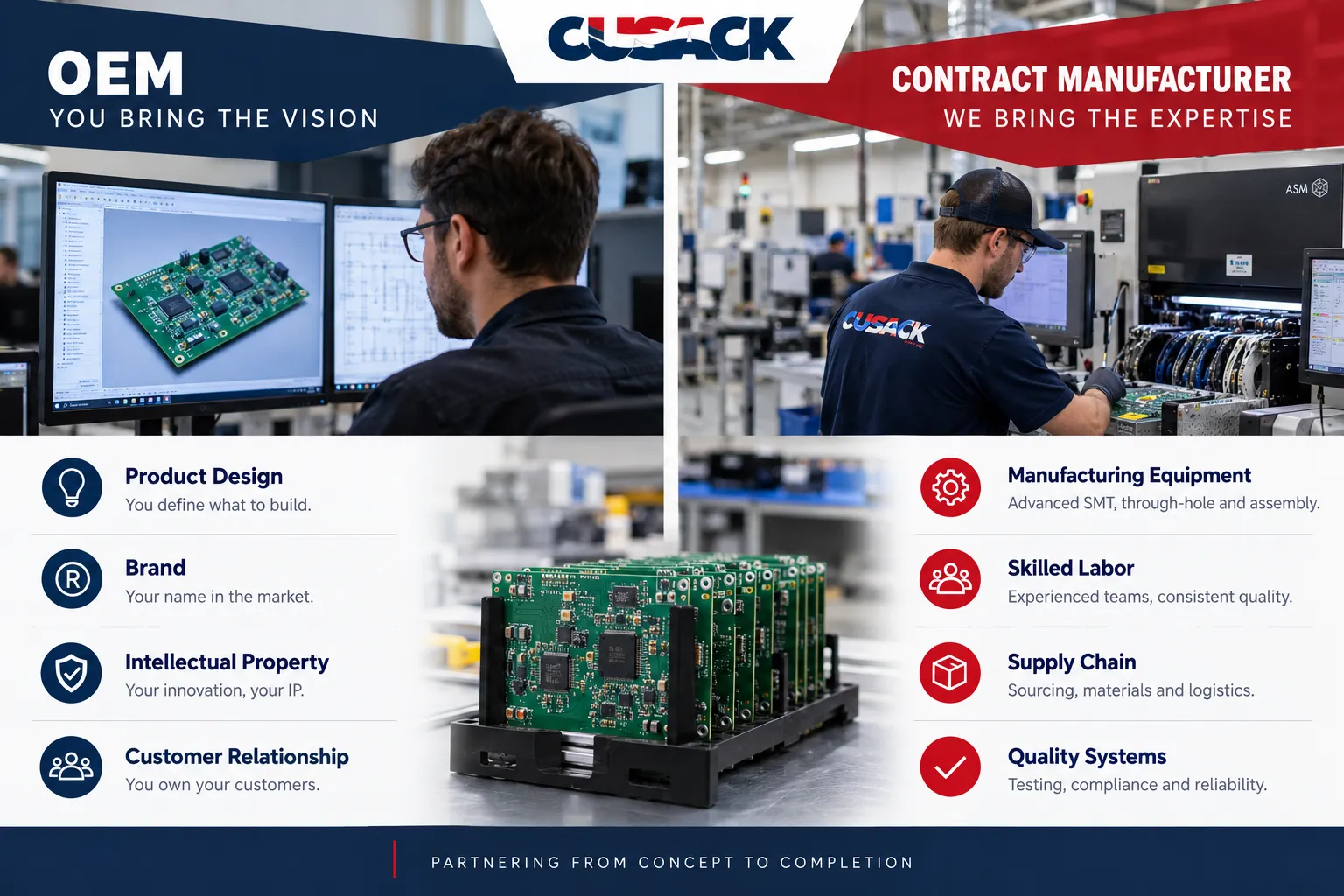
That removes an enormous barrier. Standing up an in-house assembly line means buying placement equipment, reflow ovens, and inspection systems, plus the engineers to run all three, before a single unit ships.
What Does ECM Mean?
ECM stands for electronic contract manufacturing, or, applied to a company rather than the practice, electronic contract manufacturer. You will also see CEM, for contract electronics manufacturer, which means the same thing with the words reordered.
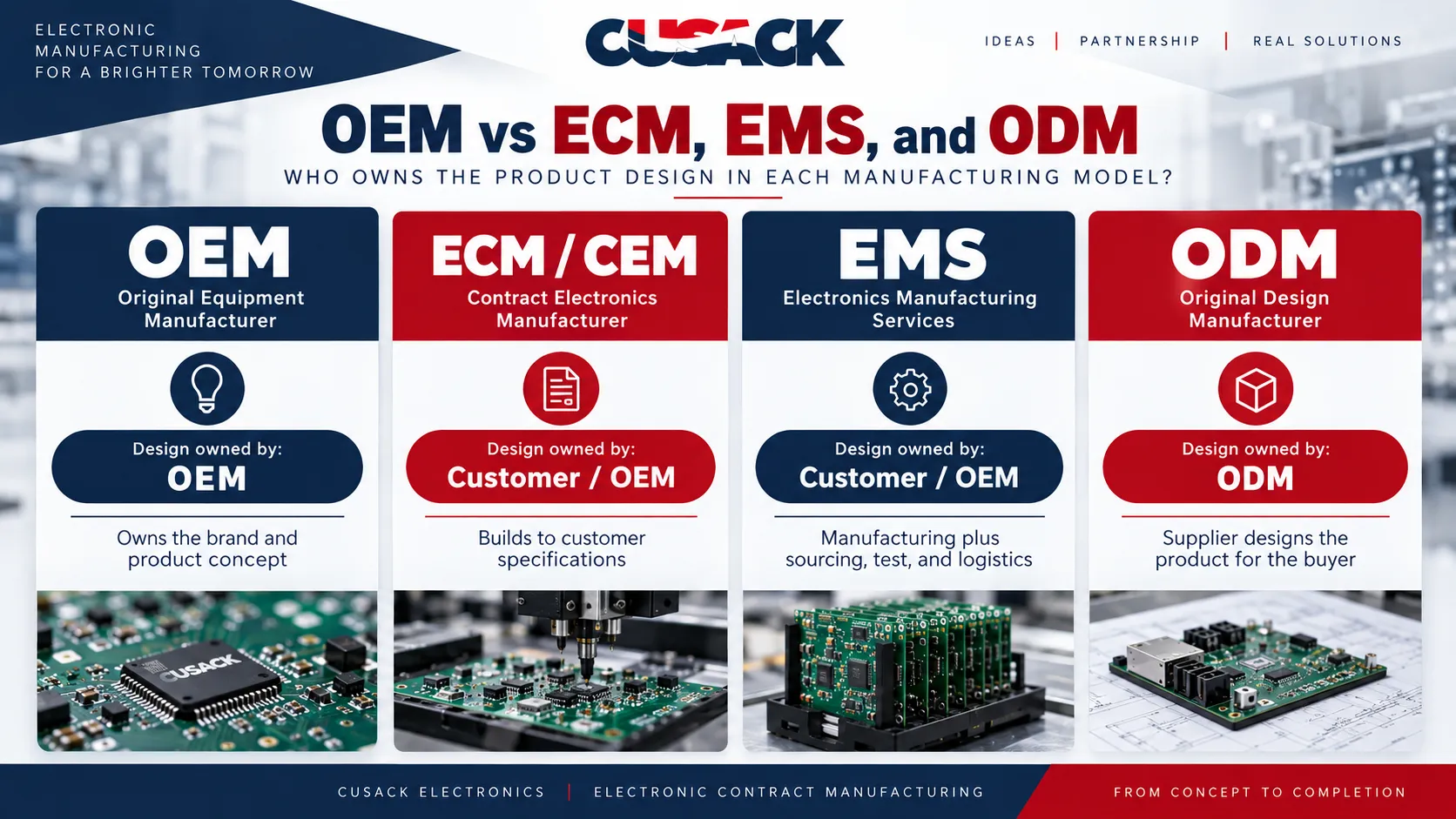
The ECM meaning that trips people up is its relationship to EMS. Electronic manufacturing services (EMS) is the broader, more modern label covering the full scope of work: design support, assembly, testing, supply chain management, repair, and distribution.
Here is the cleanest way to hold the distinction. ECM describes the commercial relationship. EMS describes the work performed inside it. A provider of electronic contract manufacturing services is an EMS company; the two terms point at the same building.
How Is Contract Electronics Manufacturing Different From OEM and ODM?
The acronyms in this industry overlap badly, and the differences matter because they determine who owns your intellectual property.
| Term | What it means | Who owns the design |
|---|---|---|
| OEM (Original Equipment Manufacturer) | The company whose brand goes on the product and who sells it | The OEM |
| ECM / CEM | The outsourced manufacturer building to the OEM’s design | The OEM (client) |
| EMS | The full service category: assembly, sourcing, testing, logistics, repair | The OEM (client) |
| ODM (Original Design Manufacturer) | A manufacturer that designs the product itself and sells it for rebranding | The ODM (manufacturer) |
The line worth memorizing runs between ECM and ODM. Under contract electronics manufacturing, you hand over your design, and it stays yours. Under an ODM arrangement, you are buying someone else’s existing design and putting your logo on it.
ODM is faster and cheaper to market. It also means a competitor can buy the same product from the same factory next quarter.
What Services Do Electronic Manufacturing Companies Provide?
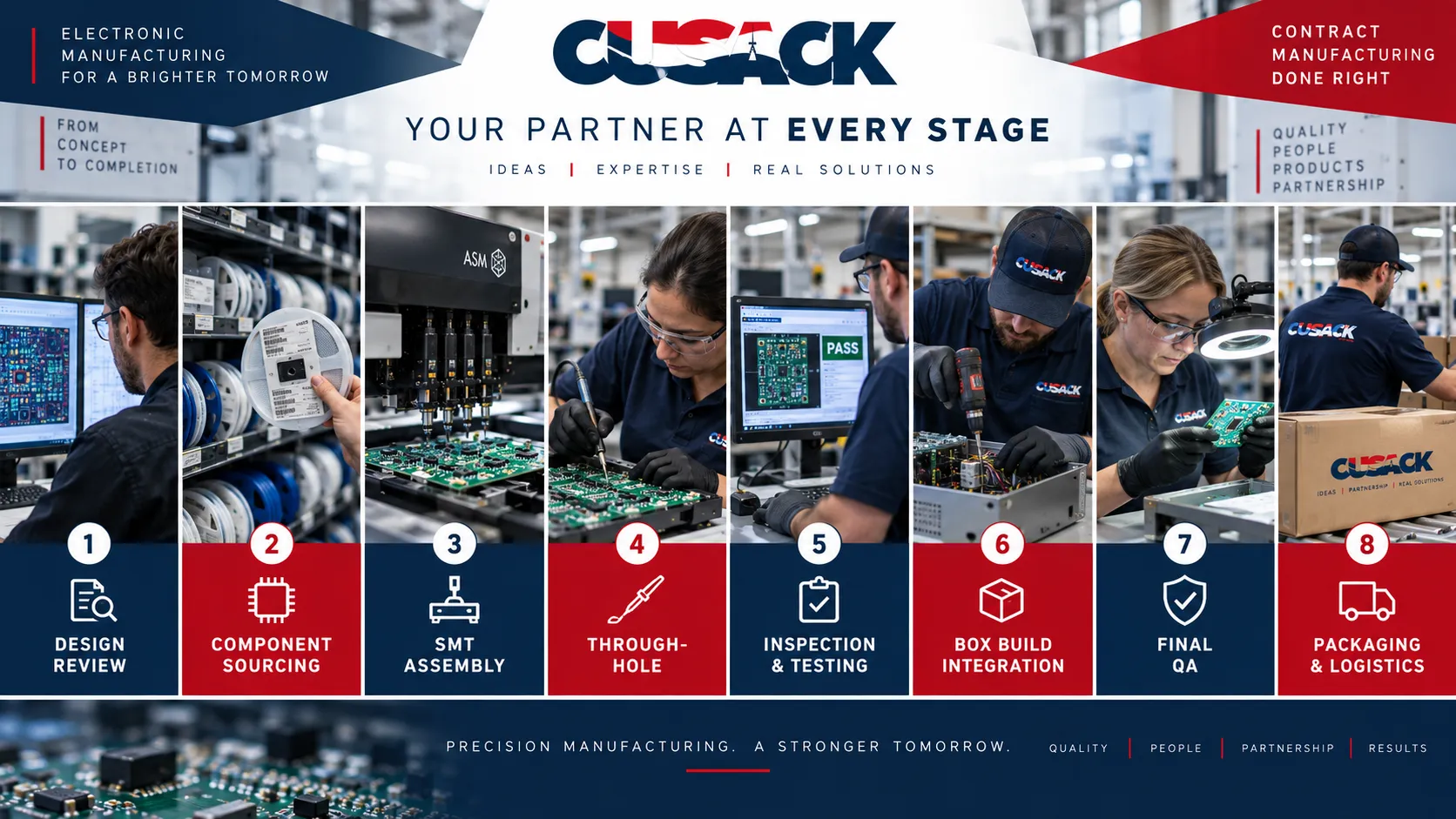
A full-service provider covers the path from a design file to a packed carton. The scope a partner covers determines how many vendors you have to coordinate yourself.
- Design review and DFM: engineering feedback that catches production problems while changes are still cheap. This is where a design for manufacturability review earns its keep.
- Component sourcing: procuring every part on your bill of materials (BOM), managing lead times, and flagging end-of-life risk before it stops a line.
- Printed circuit board manufacturing: fabricating the bare board itself, either in house or through a qualified partner network.
- Printed circuit board assembly (PCBA): placing and soldering electronic components onto the board. This is the heart of electronics assembly services.
- Cable and wire assembly: building the wiring that connects subsystems inside a finished unit.
- Box build integration: combining boards, cables, displays, and enclosures into the complete assembled product.
- Product assembly and testing: verifying that what came off the line actually works, using in-circuit, functional, and environmental methods.
- Packaging and logistics: labeling, packing, and shipping to you or straight to your customers.
SMT and Through-Hole: The Two Ways Parts Attach
Two technologies dominate printed circuit board assembly, and most real products use both.
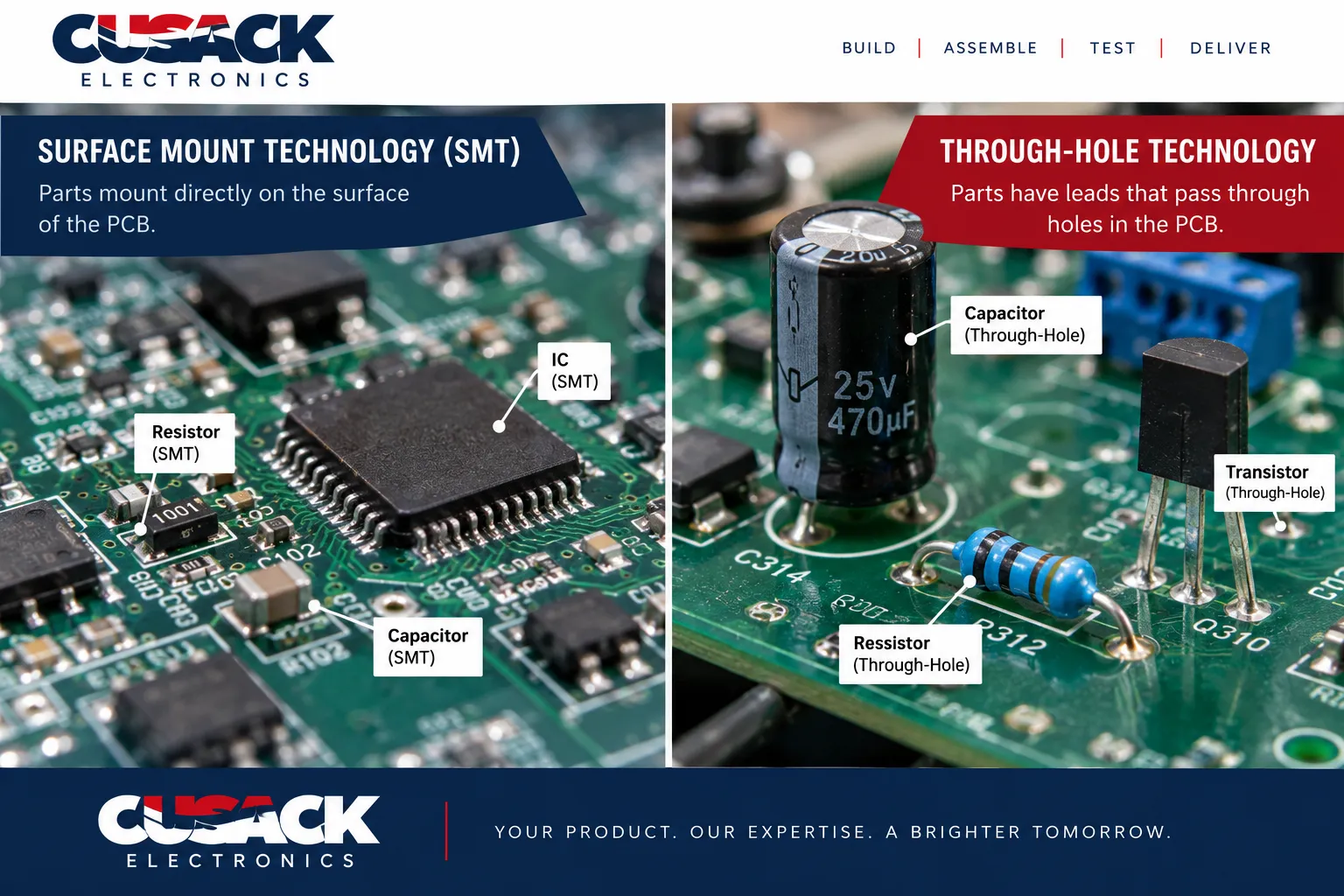
Surface-mount technology (SMT) places electronic components directly onto pads on the board surface, then bonds them in a reflow oven. It is fast, automated, and handles the tiny packages modern devices demand.
Surface-mount technology accounted for 72.99% of US electronics manufacturing services process revenue in 2025, according to Mordor Intelligence.
Through-hole technology (THT) pushes component leads through drilled holes and solders them on the far side. It is slower, but the mechanical bond is far stronger. That is why connectors, power components, and anything that gets plugged and unplugged still rely on through-hole technology.
Picture the difference this way: SMT is like gluing a tile flat onto a wall, while THT is like driving a bolt all the way through and fastening it on the other side. One is faster to apply. The other survives being yanked.
How Does the Electronic Contract Manufacturing Process Work?
Most guides describe this process from the factory’s point of view. That framing is not much use to you, because the parts you control all happen at the start.
Here is the sequence, with the handoff spelled out.
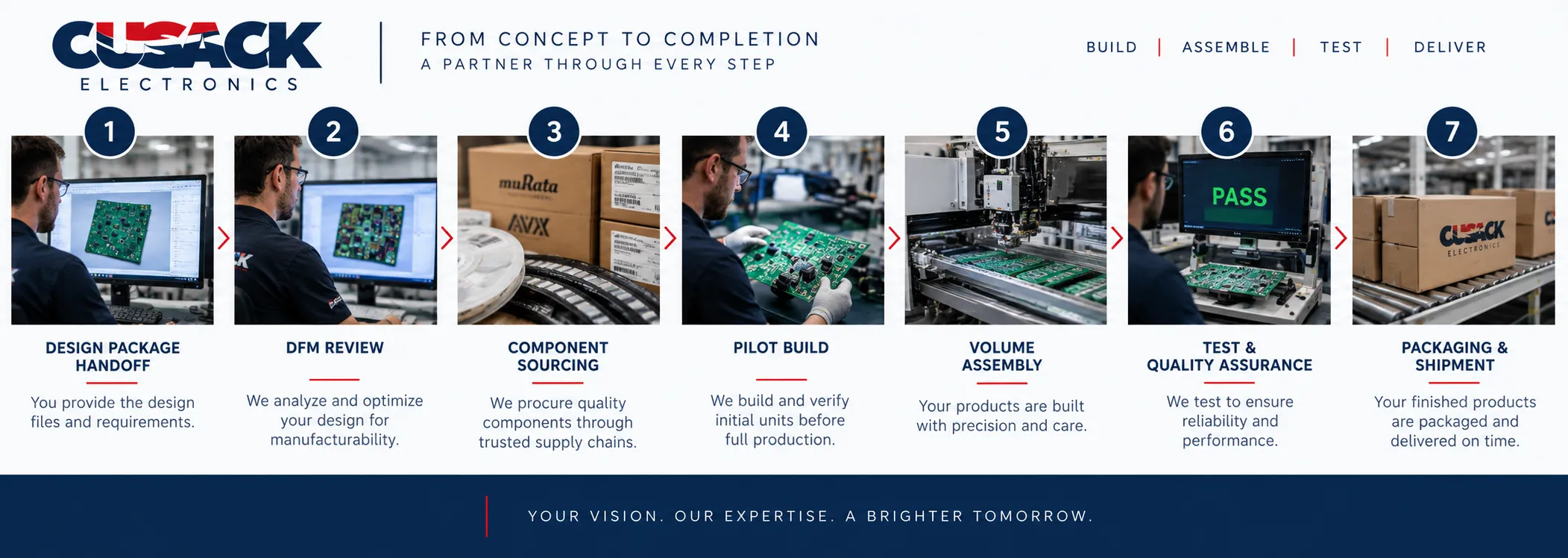
- You send a design package and receive a quote. This step decides more about your outcome than any other, so it gets its own section below.
- The manufacturer runs a DFM review. Engineers check your design against what the line can actually build: pad sizes, spacing, panelization, thermal relief, test access.
- Components get sourced and kitted. Parts are purchased against your BOM, inspected on arrival, and staged for the build. Shortages and end-of-life parts surface here.
- A prototype or pilot run is built. A small batch proves the process before volume commits. This is the heart of a structured new product introduction process.
- PCB assembly runs. Solder paste is printed, components are placed, boards pass through reflow, and any through-hole work is completed.
- Inspection and product testing happen. Automated optical inspection checks placement and solder joints. X-ray looks under packages that nobody can see beneath. Functional testing confirms the thing works. There are several distinct PCB testing methods, and which apply depends on your product.
- Final assembly, packaging, and shipment. Boards go into enclosures, units are labeled and packed, and the product ships.
The Design Package Is the Part You Control
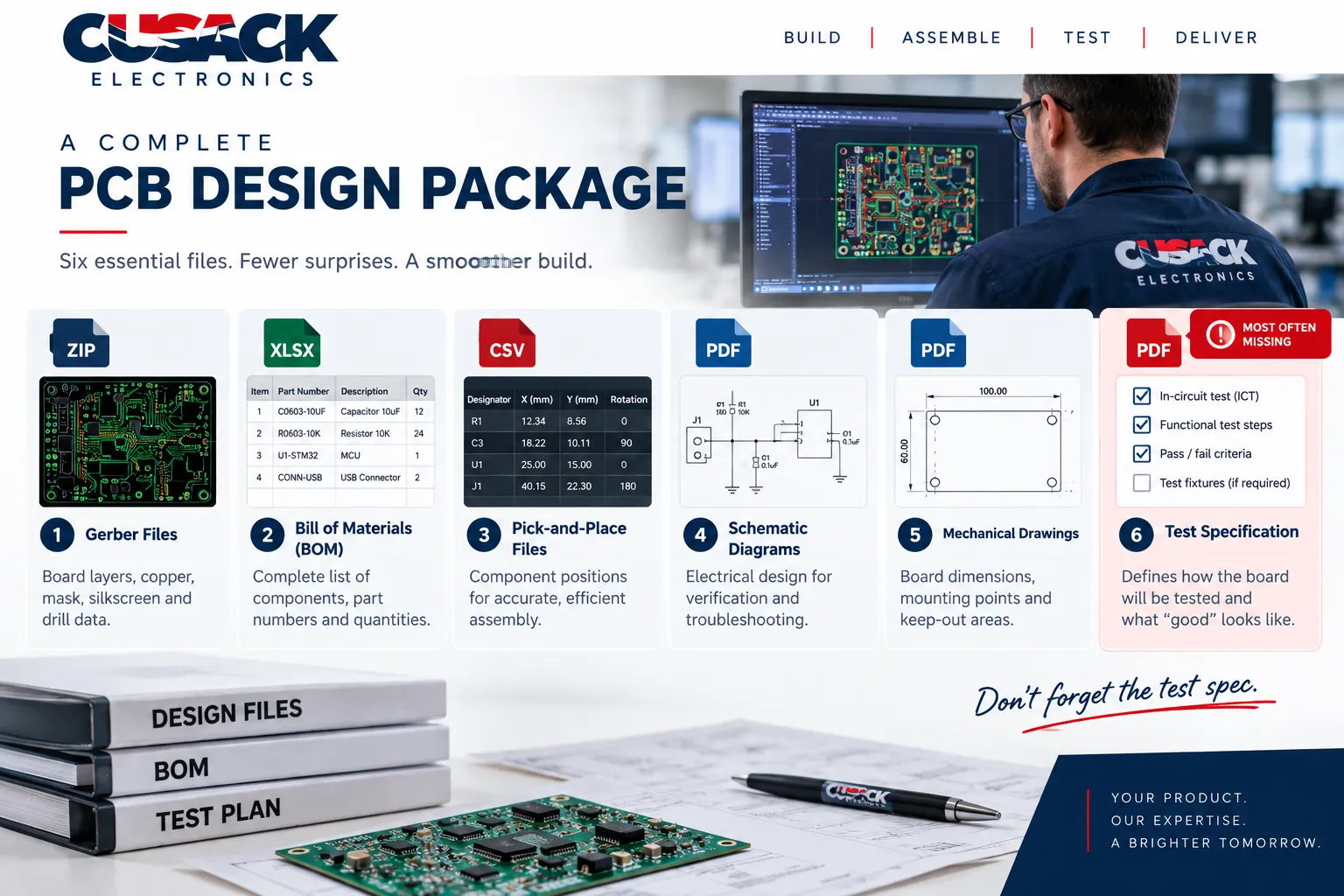
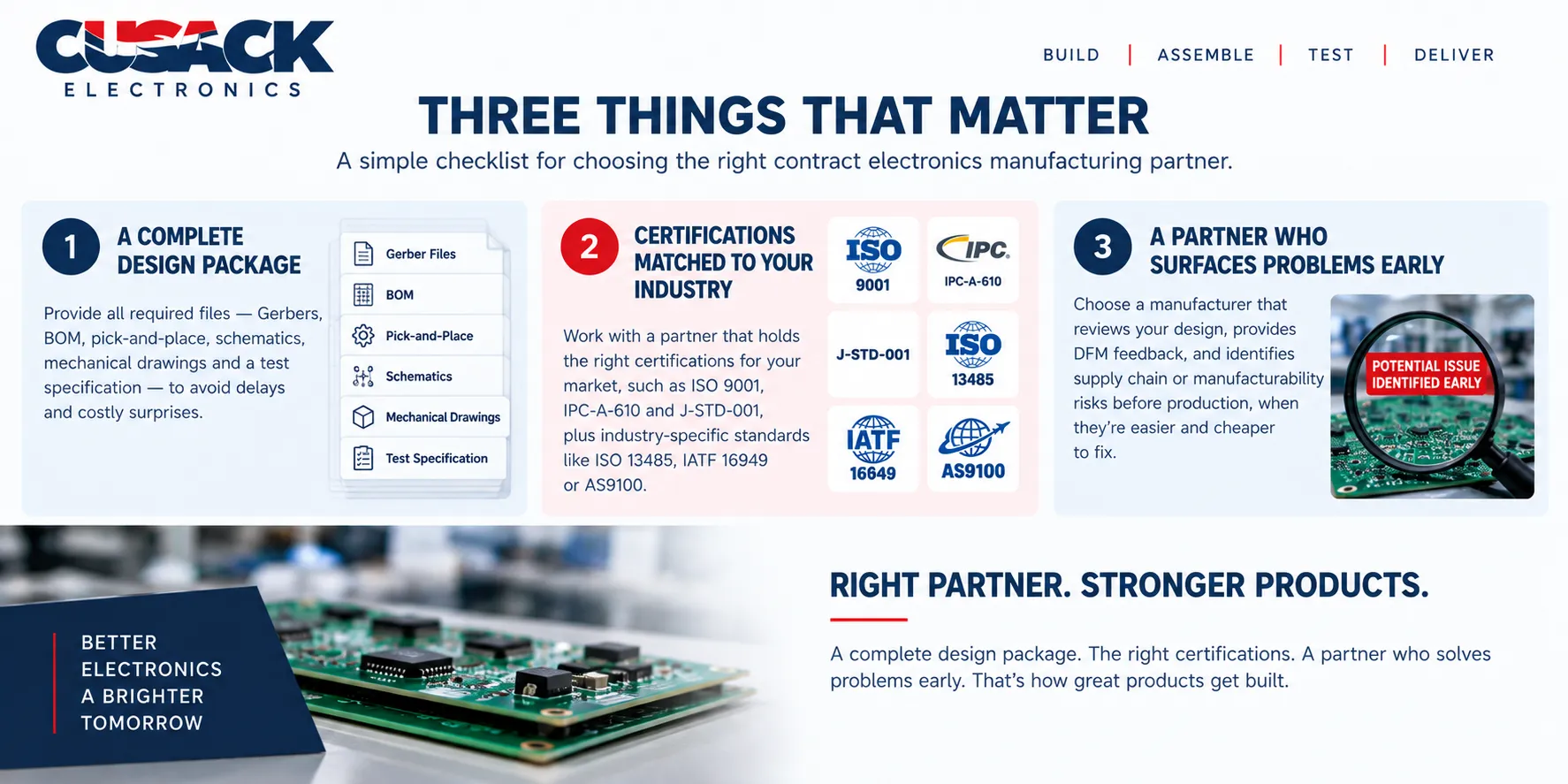
Every delay I have watched a customer absorb traces back to an incomplete handoff. A complete design package contains six things:
- Gerber files describing each layer of the board
- A bill of materials (BOM) with manufacturer part numbers, not just descriptions
- Pick-and-place files giving the coordinates and rotation of every component
- Assembly drawings showing orientation, polarity, and anything a machine cannot infer
- A test specification stating what “working” means for your product
- Your IPC class and any industry-specific requirements
That fifth item is the one most often missing, and it is the one that causes arguments later. If you have not defined what a passing unit looks like, neither has anyone else.
What Does Electronic Contract Manufacturing Cost?
There is no fixed price per board. Cost is driven by six variables: production volume, board complexity, component cost and availability, testing scope, setup and tooling charges, and how fast you need it.
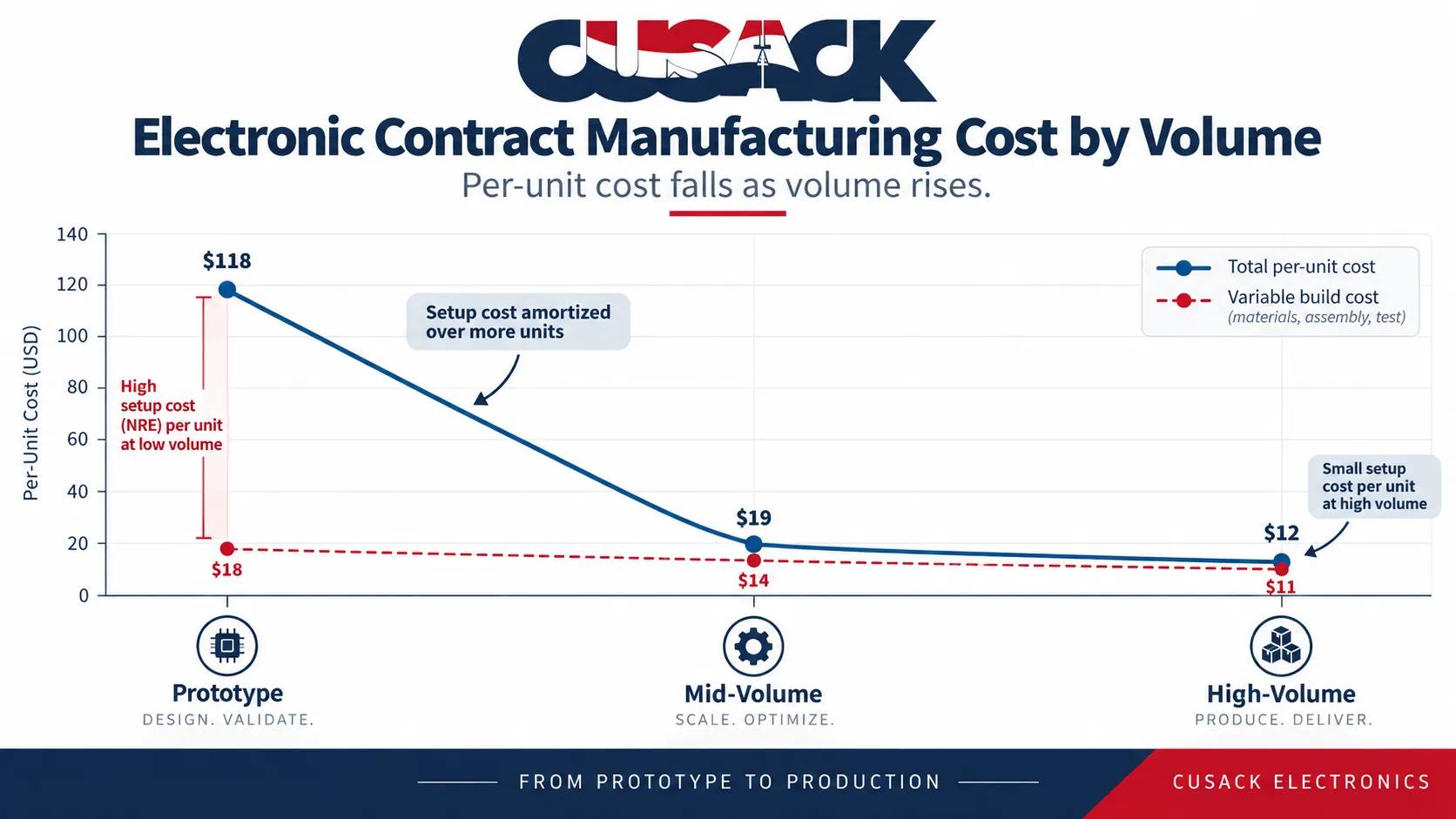
Volume moves the number more than anything else. Setup costs get spread across the run, so a prototype batch of 50 carries a per-unit cost that has little to do with what the same board costs at 5,000 units.
Two purchasing models split the industry, and the choice changes your quote structure entirely.
| Turnkey | Consignment | |
|---|---|---|
| Who buys components | The manufacturer | You |
| What the quote covers | Parts, labor, assembly, testing | Assembly labor and machine time only |
| Your workload | Send design files, receive product | Source, order, verify, kit, and ship all parts |
| Best suited to | Most product companies, especially first builds | Allocated parts, proprietary modules, high-value components you already hold |
| Main risk | Less direct control over part selection | Shortages, miscounts, blurred accountability if a self-supplied part fails |
Consignment looks cheaper on the quote because the component markup disappears. Whether it is actually cheaper depends on what your team’s procurement time is worth, which most companies never calculate.
I break that tradeoff down further in this comparison of turnkey and consignment assembly. The variables behind a quote are covered in my breakdown of what drives PCB assembly cost.
A middle path exists and is underused. Partial kitting means you supply only the handful of constrained or proprietary parts and let the manufacturer buy the commodity passives and connectors.
Which Industries Use Contract Electronics Manufacturing?
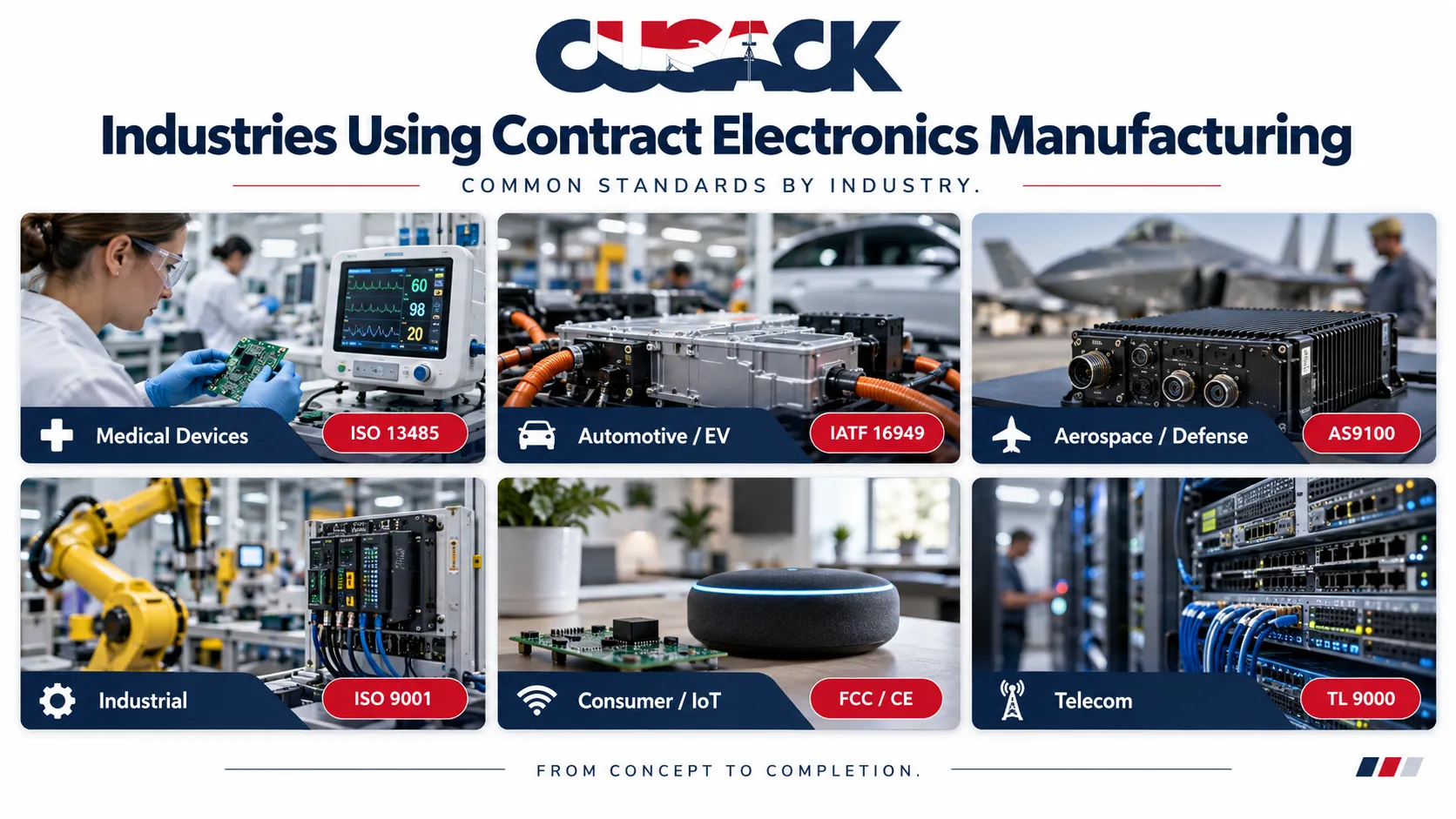
Almost every sector that ships electronics relies on it, but requirements differ sharply by industry.
- Medical devices demand traceability to component lot level and a quality system certified to ISO 13485, the medical device standard confirmed as current in October 2025.
- Automotive and EV work runs under IATF 16949, with parts that must survive heat, vibration, and a fifteen-year service life.
- Aerospace and defense require AS9100, and often ITAR registration restricting where the work can physically happen.
- Industrial and automation equipment prioritizes long component availability and ruggedness over unit cost.
- Consumer electronics and IoT live or die on speed, with short product cycles and frequent design revisions.
- Telecommunications builds carry high signal integrity requirements and steady volume.
In the United States, communications equipment led EMS demand with 25.17% share in 2025, and contract manufacturing accounted for 71.93% of US EMS revenue, per Mordor Intelligence’s July 2026 report.
How Do You Choose an Electronic Contract Manufacturing Partner?
The short answer: match certifications to your industry, confirm the service scope covers your whole product, and evaluate total cost rather than unit price.
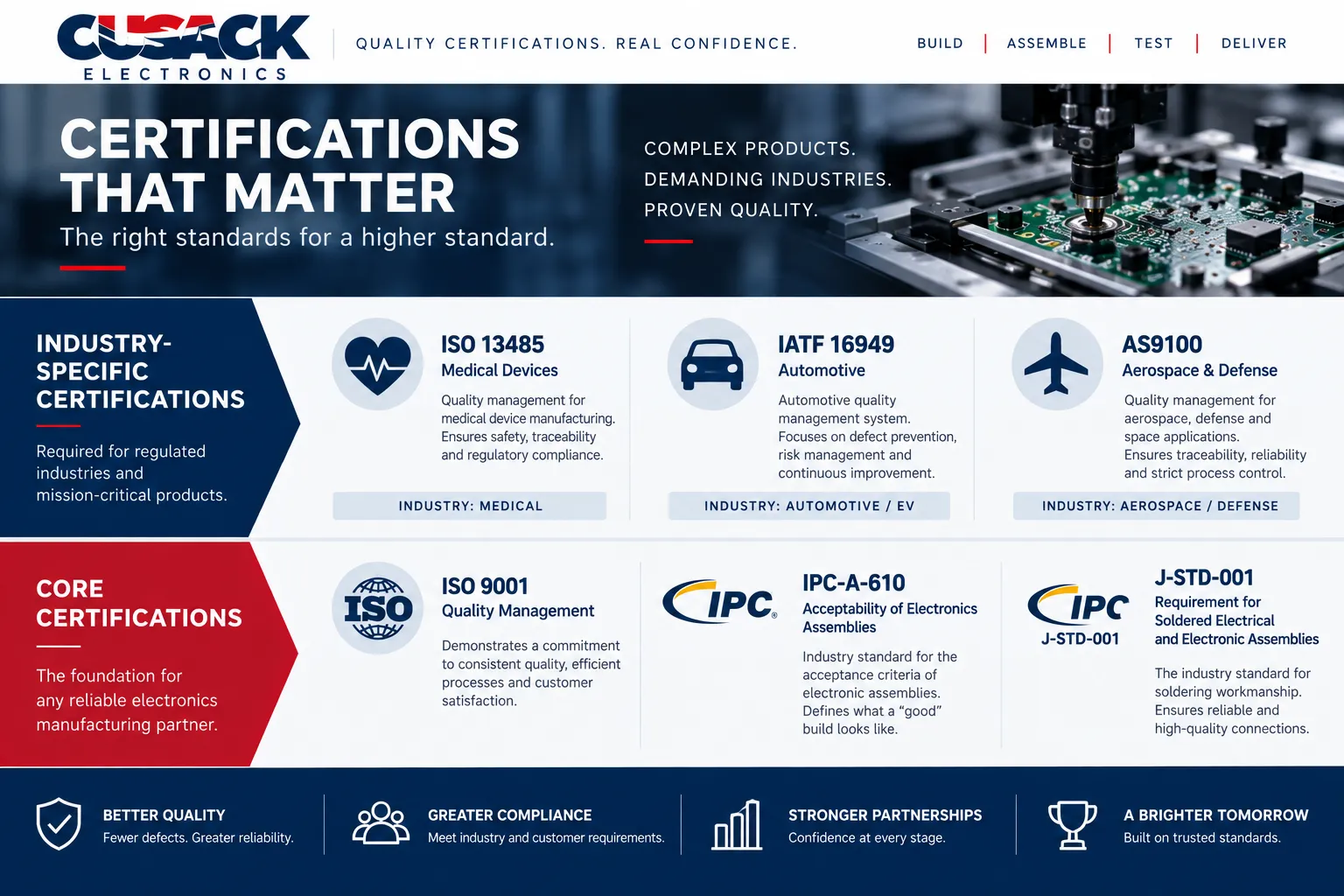
Certifications are the fastest first filter. ISO 9001 is table stakes for a quality management system, and there is a wrinkle worth knowing right now.
ISO published a new sixth edition of ISO 9001 on September 16, 2026, replacing the 2015 version that most certificates still reference. Certified shops transition on their certification body’s timeline, so a 2015 certificate is not a red flag today. Asking about the transition plan tells you how closely a manufacturer tracks its own compliance.
For the assembly work itself, IPC-A-610 sets the acceptance criteria for finished electronic assemblies, and J-STD-001 governs the soldering process that produces them. Together, they are the backbone of quality control on the line.
Ask which IPC class a shop builds to by default. Class 2 covers most commercial products. Class 3 applies where failure is not survivable.
I have written a full evaluation checklist covering DFM process, NPI experience, minimum order quantities, sourcing practices, communication, and references. Rather than repeat it here, see my step by step guide to choosing an electronic contract manufacturer.
What Are the Real Risks?
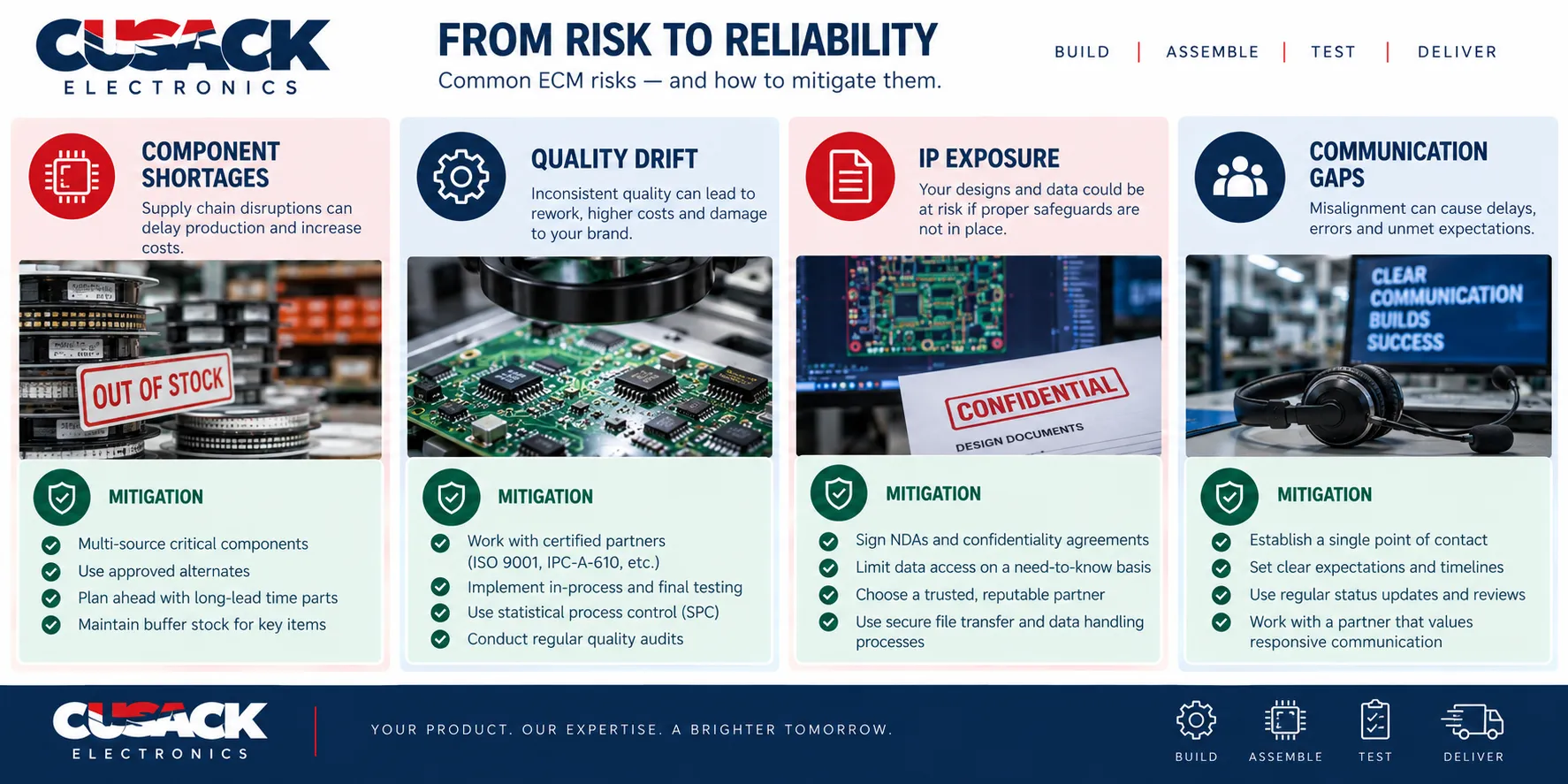
I would be doing you a disservice by presenting this as frictionless. Four risks are worth planning around.
Component shortages. Semiconductor lead times can stretch without warning. The mitigation is a manufacturer who maintains alternate sources and flags lifecycle risk during quoting rather than after the line stops.
Quality drift at scale. What holds at 100 units can slip at 10,000. Automated optical inspection, in-circuit testing, and documented quality control processes keep output consistent across a long run.
Intellectual property exposure. Your design files leave your building. Non-disclosure agreements, clear tooling ownership terms, and restricted file access are the baseline protections, and they matter more the further offshore you go.
Communication breakdown. The least technical risk here causes the most damage. Slow quoting during the sales process is usually a preview of slow answers during production.
Honest caveat: this model is not right for everyone. If your manufacturing method is itself your competitive advantage, outsourcing it hands away the thing you are actually selling. Some companies should build in house, and a good manufacturer will tell you so.
The Bottom Line
Electronic contract manufacturing lets you ship hardware without owning a factory. You keep the design, the brand, and the customer relationship. Your partner absorbs equipment cost, supply chain complexity, and quality infrastructure.
The decision that matters is not which shop quotes the lowest. It is whether your design package is complete, whether their certifications match your industry, and whether they tell you about problems before those problems become yours.
Get those three right and manufacturing stops being the risky part of your product launch.
Frequently Asked Questions
What is electronic contract manufacturing?
Electronic contract manufacturing is the outsourcing of electronic product production to a specialist third-party manufacturer that builds under the client’s brand. The client owns the design and intellectual property. The manufacturer provides equipment, labor, component sourcing, assembly, and testing. It lets companies ship hardware without investing in production facilities of their own.
What is the difference between ECM and EMS?
ECM and EMS describe the same working relationship from different angles. ECM, electronic contract manufacturing, names the commercial arrangement between a brand owner and an outside manufacturer. EMS, electronic manufacturing services, names the full scope of work delivered inside that arrangement, including design support, assembly, testing, supply chain management, and logistics. In practice, the terms are used interchangeably.
Is electronic contract manufacturing cheaper than manufacturing in-house?
Usually, though not always, and the comparison is rarely just unit price. Outsourcing eliminates capital spending on assembly equipment, inspection systems, and facilities, plus the staff to run them. In-house production can win at very high volumes or when the manufacturing process itself is your competitive advantage. Calculate total cost including tooling, scrap, and engineering time.
What is the difference between turnkey and consignment manufacturing?
Turnkey means the manufacturer sources every component on your bill of materials and quotes an all-inclusive price covering parts, assembly, and testing. Consignment means you purchase and supply the components, and the quote covers assembly labor only. Turnkey reduces your procurement workload. Consignment gives more control over part selection but shifts shortage risk onto you.
What certifications should an electronic contract manufacturer have?
ISO 9001 for quality management and IPC-A-610 plus J-STD-001 for assembly workmanship are the baseline for any reputable shop. Industry requirements layer on top: ISO 13485 for medical devices, IATF 16949 for automotive, AS9100 and often ITAR registration for aerospace and defense. Ask for current certificates with audit dates rather than marketing claims.
What files do I need to provide to get a manufacturing quote?
Six items make a complete design package: Gerber files for each board layer, a bill of materials with manufacturer part numbers, pick-and-place files with component coordinates, assembly drawings showing orientation and polarity, a test specification defining a passing unit, and your required IPC class. Missing the test specification is the most common and most costly omission.
Can electronic contract manufacturers handle low-volume and prototype runs?
Many can, though capability varies widely. Some shops are built for high-volume production and set minimum order quantities in the thousands. Others specialize in high-mix, low-volume work and quick-turn prototypes. Ask about typical order size before investing time in a quote, and confirm the same partner can scale with you from pilot to full production.
What is the difference between a PCB manufacturer and a contract manufacturer?
A PCB manufacturer fabricates bare circuit boards only, with no parts attached. An electronic contract manufacturer handles printed circuit board manufacturing plus component sourcing, assembly, testing, and often full box build integration. If you need populated, tested, ready-to-ship assemblies rather than blank boards, you need contract manufacturing services.