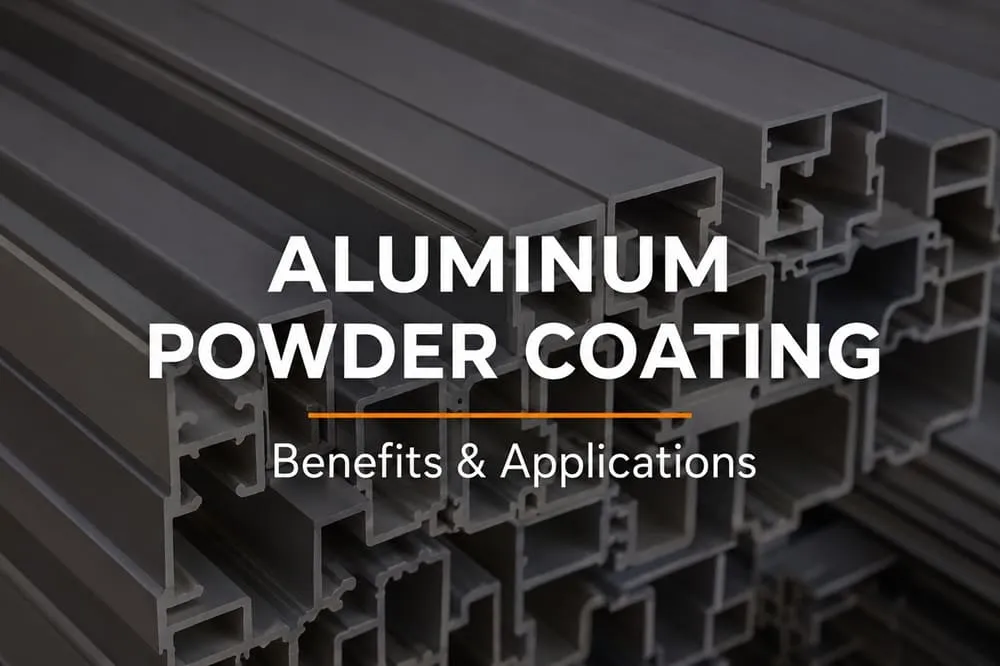
Can you powder coat aluminum? Yes — and it’s one of the most popular finishing methods for aluminum parts across industrial, automotive, and consumer products. Aluminum powder coating gives parts a durable, attractive finish that resists corrosion, chipping, and fading far better than paint.
Here’s everything you need to know about the process, its benefits, and where it’s used.
Can You Powder Coat Aluminum?
Yes, aluminum is actually one of the best substrates for powder coating. Its surface accepts an electrostatic charge well, which is exactly what the powder coating process relies on. Powder coating aluminum produces a stronger bond and more even finish than many other metals, which is part of why it’s become the default finishing choice for aluminum enclosures, extrusions, and hardware.
The Aluminum Powder Coating Process
The aluminum powder coating process typically follows four main stages:
1. Surface Preparation
The aluminum part is cleaned and pretreated — usually through degreasing, etching, or chemical conversion coating — to remove oils, oxidation, and contaminants. Proper prep is critical, since powder adheres to the surface at a molecular level.
2. Electrostatic Application
Dry powder is given an electrostatic charge and sprayed onto the grounded aluminum part. The charge causes the powder to cling evenly to every surface, including corners and recessed areas that liquid paint often misses.
3. Curing
The coated part is baked in an oven, typically between 350–400°F. The heat melts the powder, allowing it to flow together and chemically bond into a smooth, continuous, hardened finish.
4. Cooling and Inspection
Once cured, parts are cooled and inspected for coverage, color consistency, and finish quality before shipping or further assembly.
Why Choose Powder Coated Aluminum?
There are several reasons powder coated aluminum has become the standard finish across so many industries:
- Superior durability — resists chipping, scratching, and fading far better than liquid paint
- Corrosion resistance — a strong barrier against oxidation, especially important for outdoor or high-humidity applications
- Even, consistent coverage — the electrostatic process coats edges and recesses that spray paint often misses
- Environmentally friendlier — powder coating produces minimal VOC emissions compared to solvent-based paints
- Wide color and texture range — matte, gloss, textured, and custom color matching are all readily available
- Cost-effective at volume — overspray can often be reclaimed and reused, reducing material waste
Aluminum Surface Finishing: Powder Coating vs. Other Options
When comparing aluminum surface finishing methods, powder coating stands out for most applications, but it’s worth understanding how it compares:
| Finish Type | Durability | Cost | Best For |
| Powder coating | High | Moderate | Enclosures, brackets, outdoor hardware |
| Liquid paint | Moderate | Low–Moderate | Small runs, touch-ups, cosmetic parts |
| Anodizing | High | Moderate–High | Parts needing hardness and thin, uniform layers |
| Bare/polished aluminum | Low (unprotected) | Low | Short-term or purely decorative use |
For most industrial and consumer electronics parts, powder coating services offer the best balance of durability, appearance, and cost compared to these alternatives.
Common Applications of Aluminum Powder Coating
Metal powder coating on aluminum shows up across a wide range of products and industries, including:
- Electronic enclosures and chassis — protecting internal components while giving products a clean, professional finish
- Outdoor equipment and signage — where UV and weather resistance matter most
- Automotive parts — wheels, trim, and brackets that need to withstand road conditions
- Industrial equipment housings — machinery panels and covers exposed to daily wear
- Consumer products and furniture — where color consistency and scratch resistance affect perceived quality
Products that combine machined aluminum components with a powder-coated finish are common across CNC-machined parts and custom enclosures designed as part of a broader mechanical design process.
Choosing the Right Powder Coating Services Provider
Not all powder coating services are created equal. When evaluating a provider, look for:
- Proper surface pretreatment capabilities (etching, chemical conversion)
- Consistent oven curing control for reliable finish quality
- A wide range of color and texture options, including custom color matching
- Experience specifically finishing aluminum, since prep requirements differ from steel or other metals
- The ability to handle both prototype quantities and full production runs
Working with a manufacturer that offers powder coating alongside machining and assembly under one roof also simplifies logistics — parts move from fabrication to finishing without changing vendors or facilities.
Caring for Powder Coated Aluminum
While powder coated aluminum is low-maintenance compared to painted surfaces, a few simple habits extend its life even further:
- Regular cleaning — mild soap and water removes dirt and grime without damaging the finish
- Avoid abrasive cleaners — harsh chemicals or abrasive pads can dull the surface over time
- Inspect for chips or scratches — touching up minor damage early prevents moisture from reaching the bare aluminum underneath
- Rinse after exposure to salt or chemicals — especially relevant for outdoor equipment or coastal environments
With basic care, a properly applied powder coat finish can maintain its appearance and protective properties for well over a decade, even in demanding environments.
Factors That Affect Powder Coating Cost
Pricing for powder coating services varies based on a few key factors:
- Part size and geometry — larger or more complex parts take longer to coat and cure
- Surface prep requirements — heavier oxidation or contamination requires more extensive pretreatment
- Color and finish type — custom color matching or specialty textures typically cost more than standard colors
- Order volume — like most finishing processes, per-unit cost drops significantly at higher volumes
- Masking requirements — parts needing selective coating (leaving certain areas uncoated) require extra labor
Getting a detailed quote based on your specific part drawings and volume is the best way to get an accurate cost estimate rather than relying on general pricing assumptions.
Final Thoughts
Aluminum powder coating delivers a level of durability, appearance, and corrosion resistance that’s difficult to match with other finishing methods — which is exactly why it’s become the go-to choice for aluminum parts across so many industries. Whether you’re finishing an electronic enclosure, an outdoor bracket, or a full production run of machined parts, powder coating is worth considering as your default finish.
If you’re planning a project that needs aluminum finishing, reach out to our team to discuss your powder coating and manufacturing needs.